
Hannah H.
As an Amazon Associate, we earn from qualifying purchases. This post contains affiliate links, and if you buy through them, we may earn a commission at no extra cost to you. We hand test every product on this site because we’re nerds like that and only recommend ones we actually like.
I tore my quads twice while playing cricket. These 3 quad pull exercises helped me recover and stay injury-free.
After a series of severe quad strains (thanks, cricket!), I sucked it up and shelled out $1000+ on professional help to find the root cause of my frail quads.
It turns out, my quads were too strong. It was my butt muscles, in fact, that were wimpy, and my meaty thighs were over-compensating.
I learned a buttload of exercises, which I gradually adapted to my schedule, space, and equipment. Two years later, not only am I still quad-injury-free, I’ve actually become a stronger, faster, and lither athlete thanks to my rehab exercises.
My injury ultimately made me stronger and these are my 3 essential exercises for recovering from quad strains.

My injury journey.
A quick, painful history.
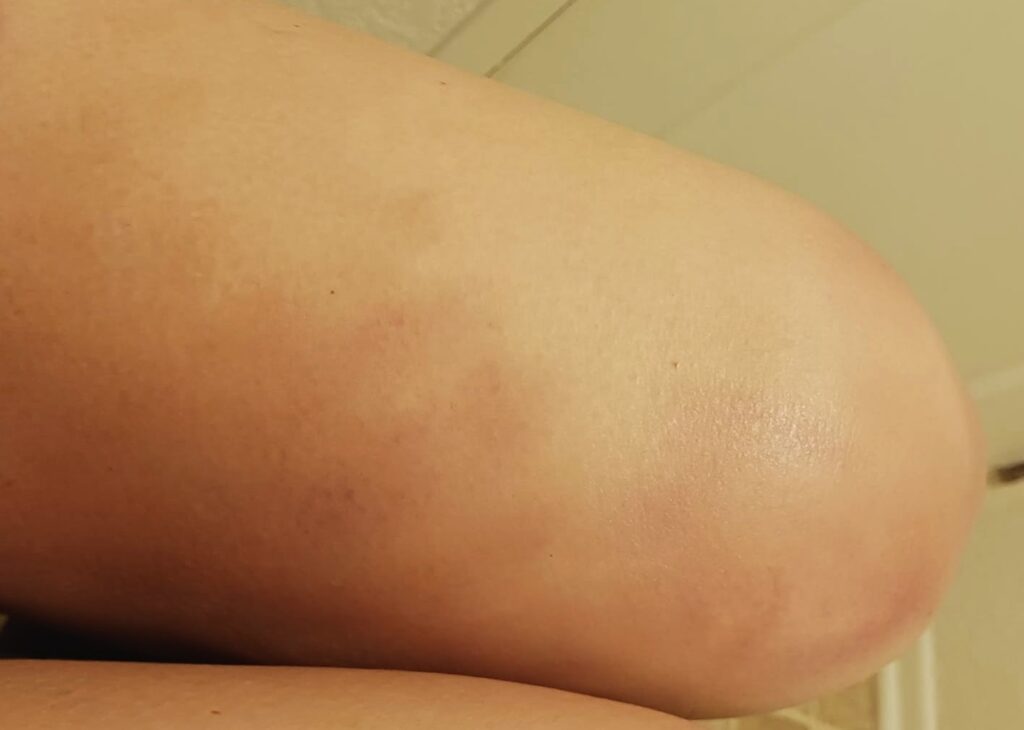
In 2023, I tore both my quadriceps muscles playing 3 back-to-back T40 cricket matches. Here’s the permanent dent in my left quad to prove it:
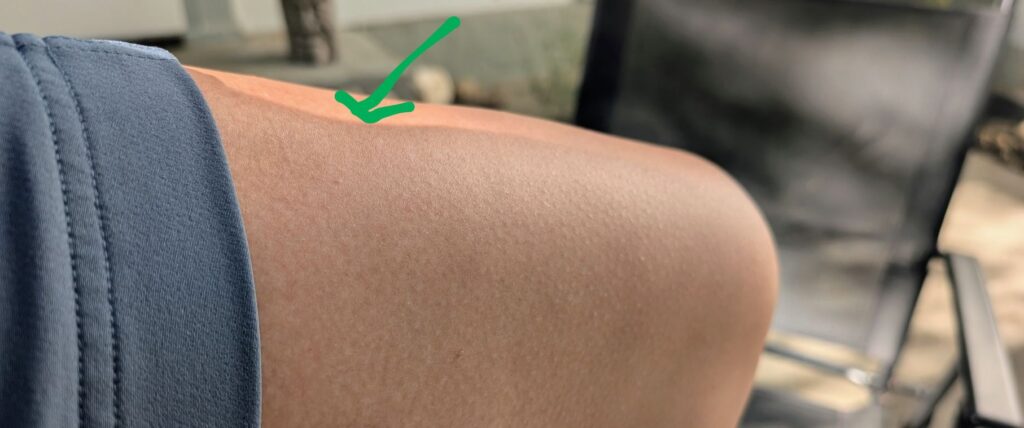
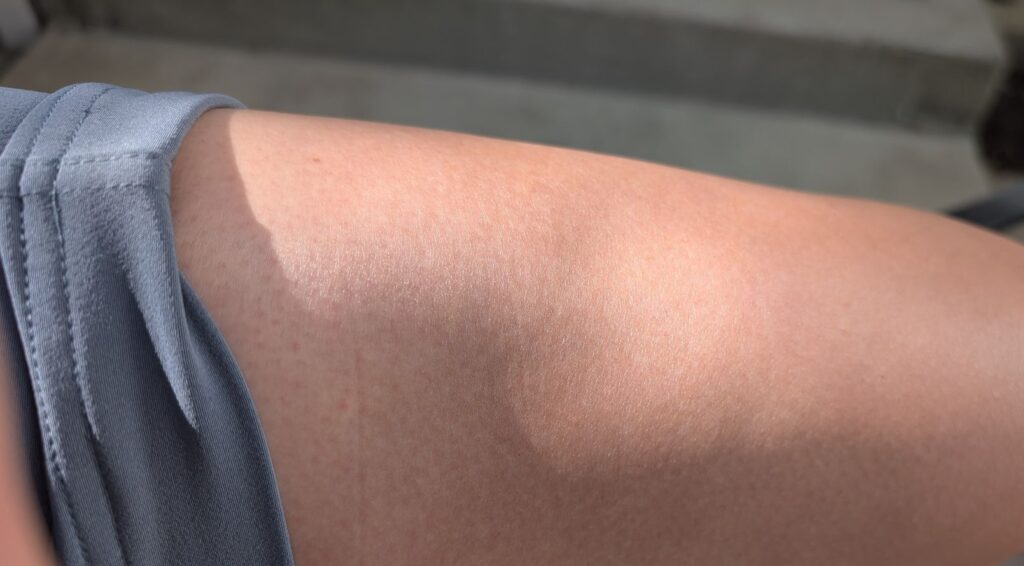
I traveled home lathered in BioFreeze and literally lifting my legs with my hands. My left quad turned purple from the bleeding muscle fibers. For the next week, I stood up from chairs via screams and death grips on furniture and people around me.
It was clearly time for rest. I took 2 months off from all activity except daily life walking. This meant no running at all. When I tried to bend my knees more than 90 degrees, it felt like someone was tugging my thigh meat off the bone.
Eventually, the pain subsided. I started jogging again, slowly, tentatively. A little tightness, but hallelujah, no pulling sensation!
History repeats itself.
Soon, it was cricket practice time again. I jogged a warm-up mile nice and easy. I felt good. Then I took off after a ball and instantly tore my left quadriceps muscle again. My right one was spared, until two months later, when I ripped it trying to sprint in another cricket practice.
I’m embarrassed to say this happened several more times, but from increasingly more basic movements, like crouching down at work. Clearly my quad muscles weren’t healing and good old RICE wasn’t solving the root cause.
I needed professional help, so I sucked it up and shelled out the money for a medley of physical therapy options online and in-person. Here’s what I learned after spending $1000 on sessions.
The problem was my butt.
The issue wasn’t actually my quads. My quads were just fine before the muscles nearly ripped in half.
The problem was my weak butt. I was compensating for my frail gluteus maximus muscles with my powerful quads when I was sprinting. Okay, maybe not powerful, but certainly stronger than my butt muscles.
The solution? I needed to strengthen my butt muscles so they could do their fair share of work during explosive take-offs.
The hard work to heal.
I learned 20+ eccentric and plyometric quad strain exercises during my physical therapy. For 10 weeks, I did 6 different exercises every day at-home, gradually increasing resistance/weight. I also learned proper warm-up movements, along with post-workout stretches.
My in-person PT included recovery tools such as cupping (questionable if it actually helps), Graston scraping (kind of helped), and massage/massage gun (felt really good). These helped soften the sting of the treatment cost and provided instant gratification, but they didn’t cure the root cause of the recurring quad muscle strain injury.
That part involved doing my exercise homework everyday. I adapted the quad and glute exercises to my available equipment and space, along with my schedule. For long-term maintenance, I found the 3 quad pull exercises below to be essential and more than enough.
The result.
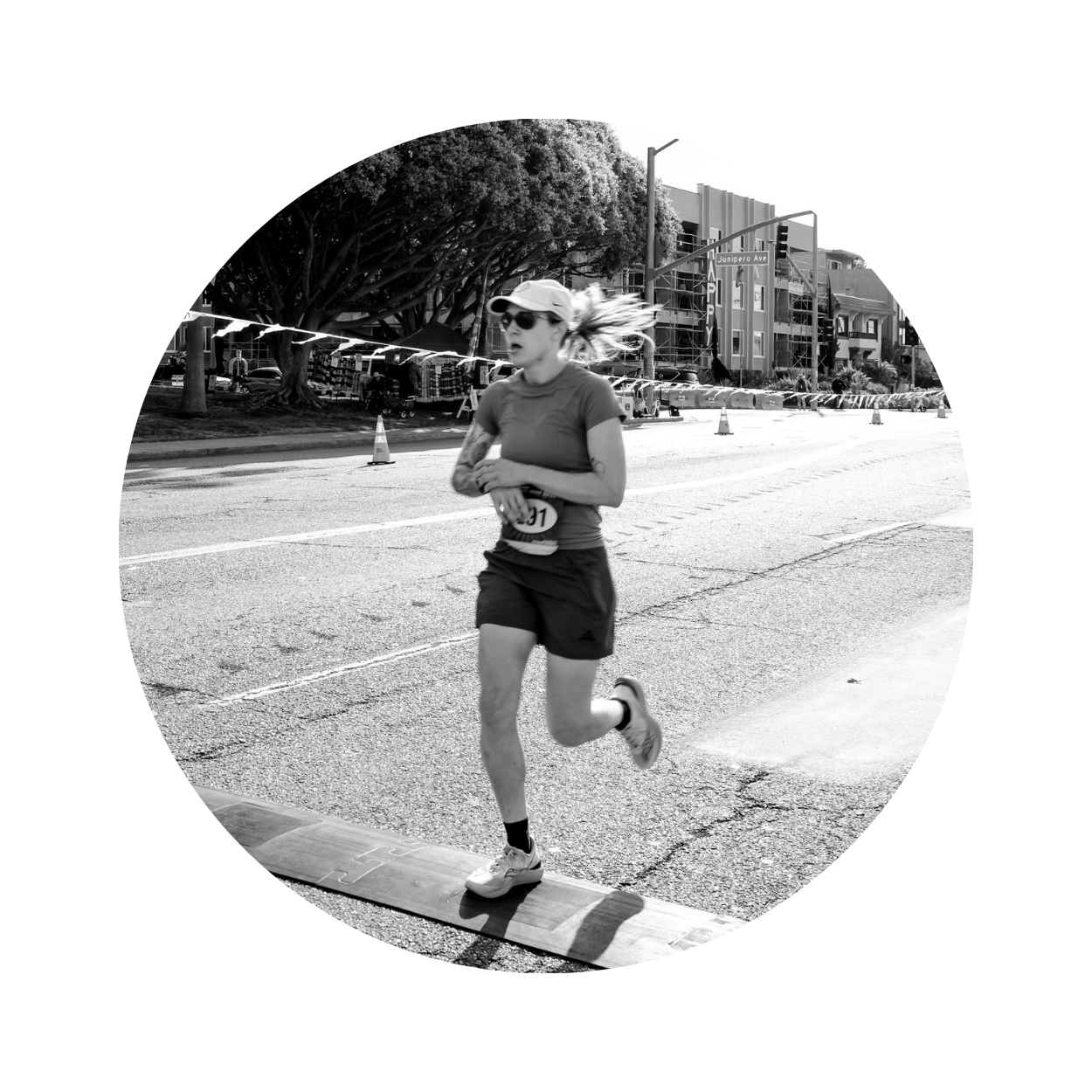
After that first cricket match where I limped away with bilateral Grade 2 quad strains, I thought I’d never run again, let alone sprint in cricket. I’ve since played more than 50 T20 and T40 cricket matches. I’ve won 3 local 5Ks. I go for runs after my 3-hour cricket matches.
I can confidently say that I healed my quads and kept them injury-free by doing these 3 quick and easy pulled quad exercises. I’m not a doctor, so who knows if these will actually work for you. However, this is what actually worked for my severe quad strains.
The full quad strain exercises rehab routine.
This routine takes less than 10 minutes total, so ideally, you should be doing it daily. However, my routine involves doing it most days. I also don’t care about perfect form.
The only equipment you need is a resistance band. I recommend the Fit Simplify resistance bands from Amazon. I’ve been using the set for 2 years and they’re still taut. Plus, it includes 5 resistance levels, so you can start light and level up as you get stronger.
Interested in the full 20-exercise pulled quad muscle rehab routine I customized for home use? Stay tuned – we’re working on it!
But First, A Dynamic Warmup
Before any exercise, run, or cricket match, I now warm up with dynamic stretches. These are active movements that get my joints supple and ready for motion. Limber limbs mean less chance of injury. I save my static stretching (classic stretches that you hold) for after the workout.
These are the 3 easy dynamic warmup stretches that I ALWAYS, ALWAYS do to get my quads ready for action.
12
High Knees
Just march in place, bringing your bent knee above waist level. Alternate legs with each rep.
12
The Frankenstein
Now march in place like Frankenstein’s monster. Kick one leg up to waist height, fully extended, and touch your toe with the opposite hand. Alternate legs with each rep.
10
Shoo the Chickens (AKA Hamstring Scoop)
Stretch out one leg, heel on ground and toe to sky, and scoop the air from behind your leg to in front. Pretend you are shooing chickens underfoot. Alternate legs.
That’s it! There are more dynamic stretches that I do when I’m extra locked up or preparing for a long cricket match, but these are my 3 essentials that I can’t skip.
Quad Strain Exercises: Eccentric
#1 – The Banded Runner
This eccentric exercise works the glutes and hamstrings of your stationary leg. If you’re not feeling it in your butt, you’re not doing it right.
3×5
Put a resistance band over both legs just above knee height. Hinge over slightly at your hips so your butt juts out just a bit. Bend your knees a tad so they’re not locked. Hold your arms like you’re running.
- Lift your right leg so the calf is about level with your left knee.
- Push your raised right leg forward against the resistance band. Pause, then return to position 1.
- Open your right leg outward against the resistance band. Pause, then return to position 1.
- Pull your right leg backward against the resistance band. Pause, then return to position 1.
- Do 3 sets of 5 reps per leg. Rest 30 seconds between sets.
- Make sure your stationary leg stays stable and slightly bent.
- If you can’t balance, lightly hold the wall for support.
- If the resistance feels too tough, start with a lower resistance band.
- As you get stronger, level up to 7 reps and a higher resistance.
- You should feel the burn in your standing leg rather than the moving leg.
Quad Strain Exercises: Eccentric
#2: Banded Lateral Walk
You’ll feel the burn in your glutes in this exercise that involves sidestepping with a band.
20ish meters x 3
Put a resistance band over both legs at just-below-knee height. Hinge your waist and bend your knees — the more bent, the more this glute strengthening exercise will burn. Do whatever you want with your arms.
- Stand with your feet about shoulder-width apart, so the band is taut.
- Sidestep to the right with your right leg, then follow to the right with your left leg. Make sure to keep tension in the band – don’t bring your trailing leg too close to the leading leg.
- After 10 meters, come the other way: sidestep to the left with your left leg, then follow to the left with your right leg.
- Do 3 sets of about 20 meters total. Rest 30 seconds between sets.
- I do this back-and-forth in my hallway. Is it 20 meters? Who knows. Don’t worry about exact distance.
- Start with a lighter resistance band. Focus on pausing with each step and keeping the band taut.
- As you get stronger, level up the band, move it lower on your legs, and go deeper on your squat. With the band at ankle-height, this exercise is killer.
Quad Strain Exercises: Plyometric
#3: Skater Hop
This plyometric exercise will boost your flexibility, leg strength, and balance, and give you a little cardio while you’re at it.
30 seconds x 2
You don’t need any equipment for this quad strain exercise — just space to hop side-to-side. I recommend finding a soft surface and wearing shoes to avoid slipping/and toe bone discomfort.
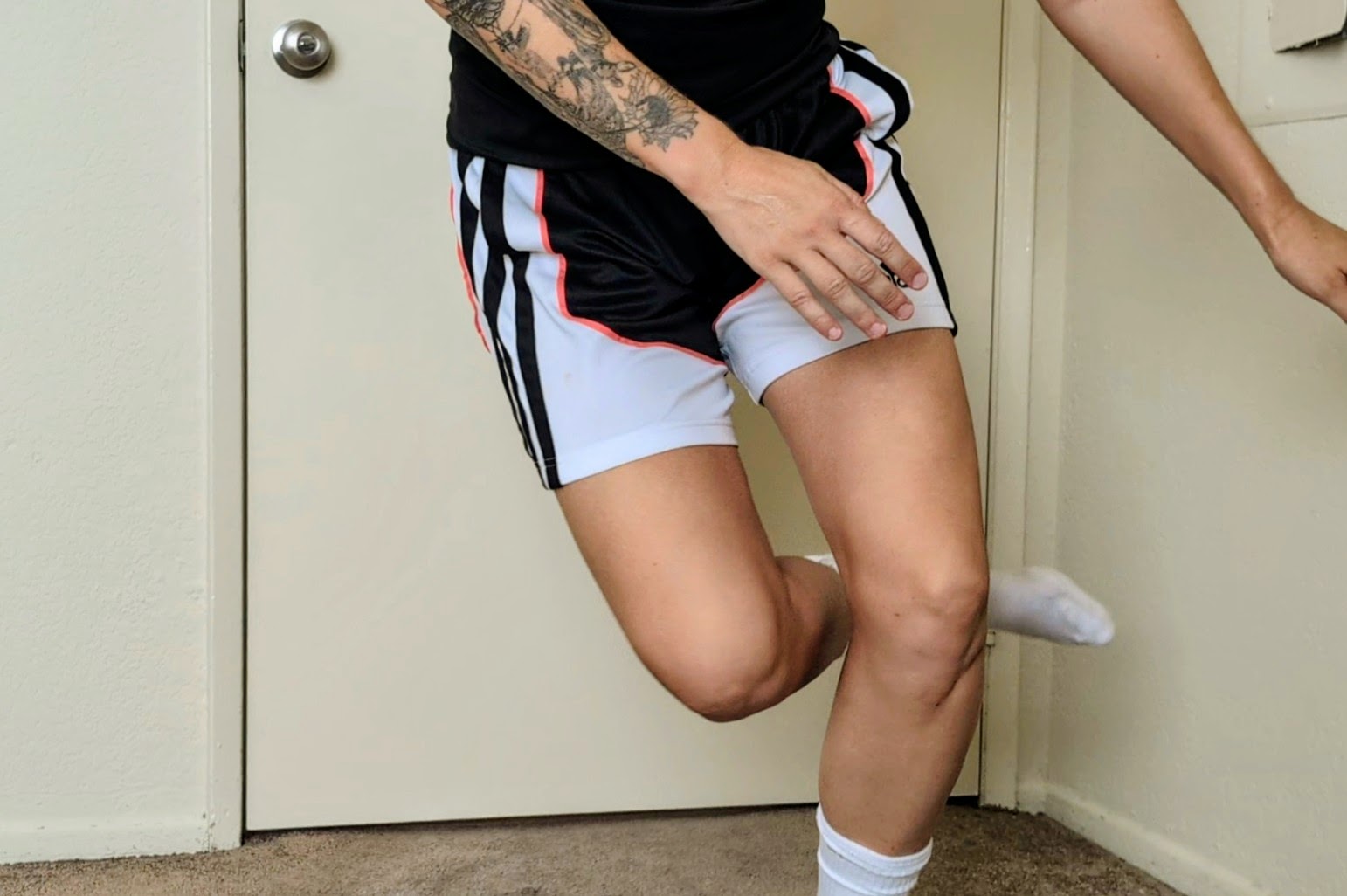
- Bring your right foot up behind your left knee so you’re balancing on your left leg. At the same time, begin to bend your left knee.
- Push off with your left leg and leap to the right, landing on your bent right leg.
- As you land, bring your left foot behind your right knee.
- Now push off with your right leg and leap to the left, landing on your bent left leg.
- Move your arms in sync with your hops.
- Do this for 30 seconds, 2 sets.
- The motion should sort of mimic a speed skater’s movement — hence the name.
- You’re leaping from single leg to single leg, side-to-side.
- Pause and get low before each leap. Push down into the ground on the leg you’re balancing on and explosively spring into the hop.
- You can do better than I did in this video — your goal should be to leap out of the frame on each side.
- No need to do more than 30 seconds.
Good Luck!
These quad strain exercises have helped me stay soft-tissue injury-free for 2+ years now. Beyond their rehab benefits, they’ve made me a better athlete. My lower body feels stronger, faster, and more flexible, and I recover faster.
I’ve whittled down my routine to these 3 key exercises, but there are at least 15 more that helped me get to this maintenance point. Stay tuned for the full routine!