
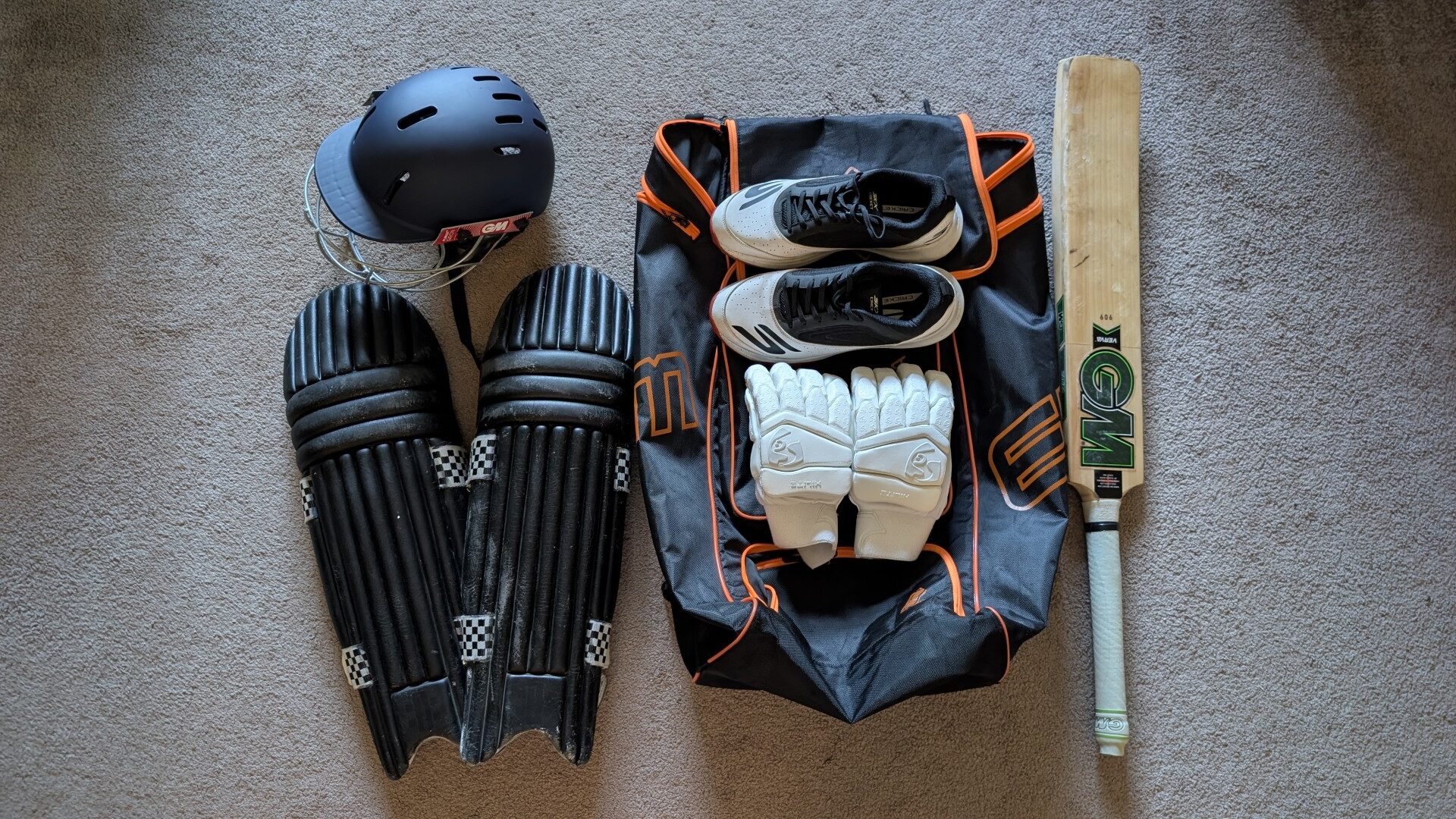
A cricket kit includes 6 must-have pieces of match gear: cricket bat, shoes, protective gear you wear while batting (helmet, gloves, and leg guards), and a specialty kit bag to carry everything in. Hannah explains each piece of equipment in detail and recommends products she used as a beginner adult cricket player.
As an Amazon Associate, we earn from qualifying purchases. This post contains affiliate links, and if you buy through them, we may earn a commission at no extra cost to you.
- Cricket Kit Quick Buy Guide
- 1. Cricket Kit Bag: Carry All Your Gear
- 2. Cricket Bat: The Star of Your Cricket Kit
- 3. Batting Pads: Crucial Leg Protection
- 4. Batting Gloves: Grip and Impact Protection
- 5. Cricket Helmet: Mandatory Head Protection
- 6. Cricket Shoes: The Most Personal Item in Your Kit
- What’s not essential, but recommended for your cricket kit.
You need these 6 things in your cricket kit before you can play in your first cricket match.
When I first started playing cricket 4 years ago, I had no idea what a cricket kit was. As a runner, all I ever needed to do was put on my racing shoes and I was “match-ready.”
Now, not only have I learned the importance of each piece of cricket equipment (and there are a lot of them), I love testing new cricket gear.
These are the 6 key items every beginner cricket player must have in their kit to practice and play leatherball cricket.
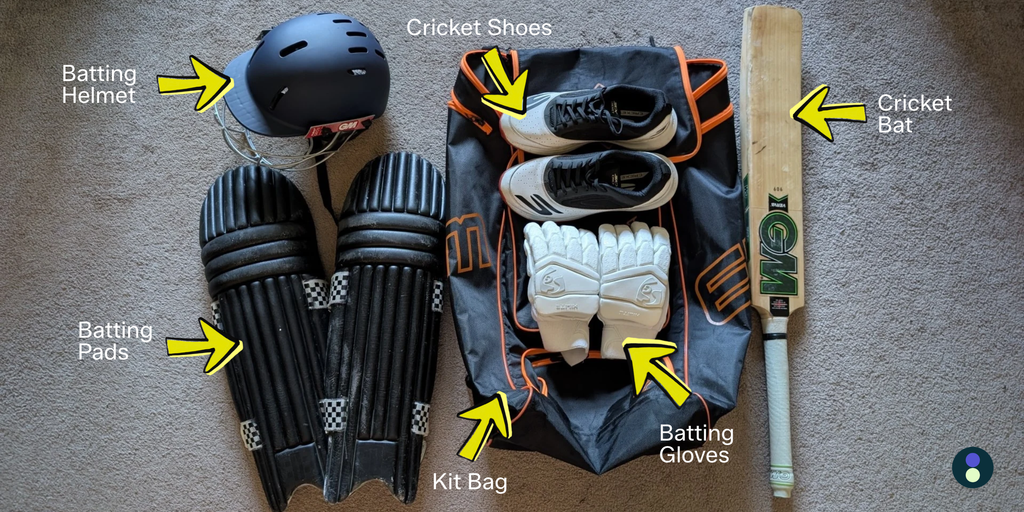
Cricket Kit Quick Buy Guide
Bag
Under $50. Enough storage space. Sturdy. Fast Delivery.
Bat
About $150. Grade 5 English willow. Large profile. Good bang for your buck.
Pads
Under $50. Extremely lightweight. Unique strap style and shape. Easy to run in.
Gloves
Under $50. Sheep leather palm. Modern split-finger gloves. Fast delivery.
Helmet
Under $100. Incredibly lightweight. Has a size-adjustment dial.
Shoes
Under $60. Grippy rubber spikes. Batters and bowlers can wear them. Good for any surface playing field. Easy to try on and test size at home.
1. Cricket Kit Bag: Carry All Your Gear
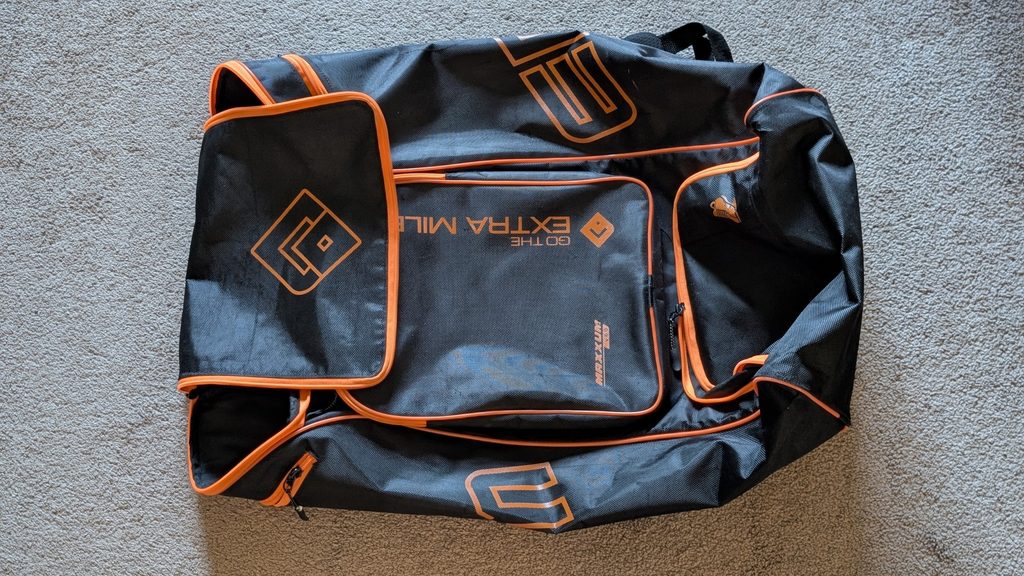
You can’t have a cricket kit without a cricket kit bag. Believe me, I tried. We’re about to cover a lot of cricket gear and it all has to get packed in something, so you can carry it to the field. Cricket equipment is weirdly shaped, so normal bags and backpacks don’t get the job done.
What are the different types of cricket kit bags?
Wheelie Cricket Kit Bag
Wheelie cricket kit bags are long, rectangular bags with wheels on one end. They’re too big to wear, so you pull them behind you at an angle via a handle.
Wheelie bags fit a lot of cricket equipment. We have one that we use as the team cricket kit and it holds at least two full sets of gear. I look forward to the days when we don’t have to bring the team bag with us because it’s such a chore to lug around.
Beginner cricket players don’t need to invest in a wheelie cricket kit bag. Instead, they’re ideal for team managers/players who like to bring extra equipment.
Wheelie Duffel Bag
A cricket wheelie duffel bag is slightly smaller and less stiff than a wheelie bag, and has both backpack straps and wheels. This means you can either drag it upright or wear it on your back.
I find this type of cricket kit bag to be really unwheel-dy. The wheels are usually too small to balance the top-heaviness, so it wobbles and scrapes when being pulled. At the same time, it’s too big and bulky to comfortably wear on my back.
Cricket Duffel Bag/Backpack
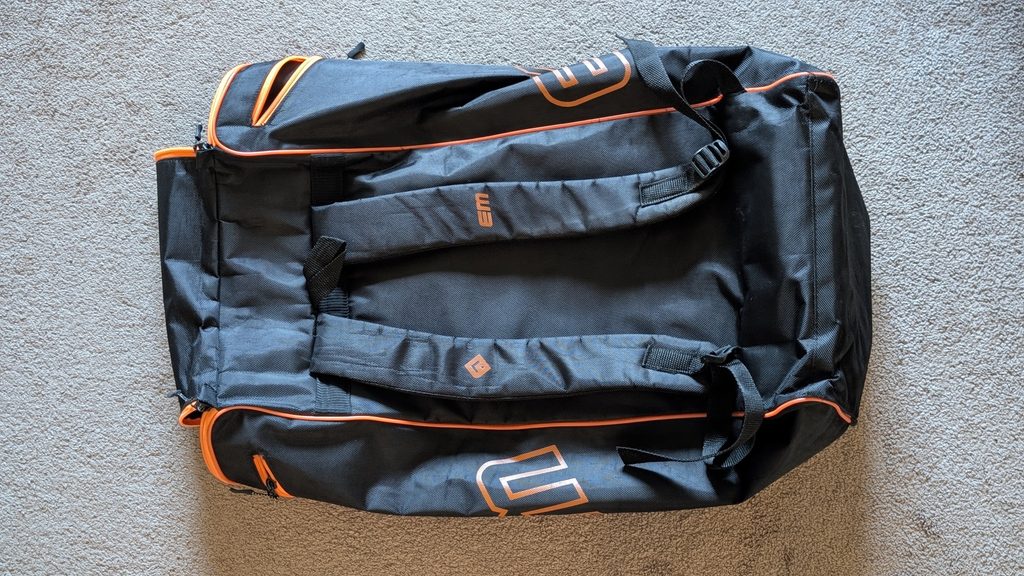
A cricket duffel bag is basically a big backpack designed to fit cricket gear. I have this backpack style kit bag right now and it’s my favorite type. While it only holds one set of cricket equipment, it’s easy to wear and carry around.
A duffel kit bag also keeps me organized and packed light because it’s not too deep or big. All of the equipment we’ll be discussing below will fit it in a cricket duffel bag (bat goes in the side pocket). It’s the ideal bag type for beginner cricket players.
How much do cricket kit bags cost?
In the United States, cricket kit bags range from about $30 to $200. For your first one, there’s no need to spend a lot on something with all the bells and whistles. You can find a cricket bag that won’t rip for about $50.
What’s a good cricket kit bag for beginners?
For a reliable cricket duffel bag that will arrive fast and has enough room for your full kit, we recommend starting with this classic SS Camo Duffel for less than $50. I’ve also used the EM Maxxum duffel bag, and it offers great value and roominess for the sub-$40 price-tag.
2. Cricket Bat: The Star of Your Cricket Kit
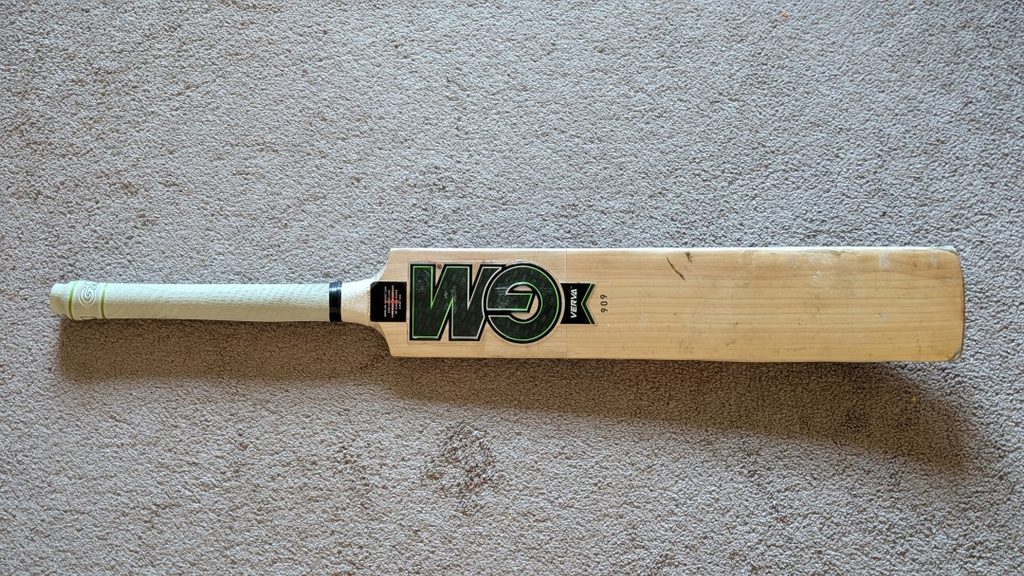
Cricket bats are made out of willow wood (English or Kashmir), and come in different sizes, weights, profiles, and wood-grades. Finding a cricket bat that works for you will take time and experimentation.
How to pick the right bat for your cricket kit?
If you live near a cricket store, I recommend visiting so you can pick up different cricket bats. Don’t be wooed by the most expensive bat. While pro-grade cricket bats look beautiful, a beginner cricket player should first invest in a lower-grade, inexpensive cricket bat.
English willow vs Kashmir willow.
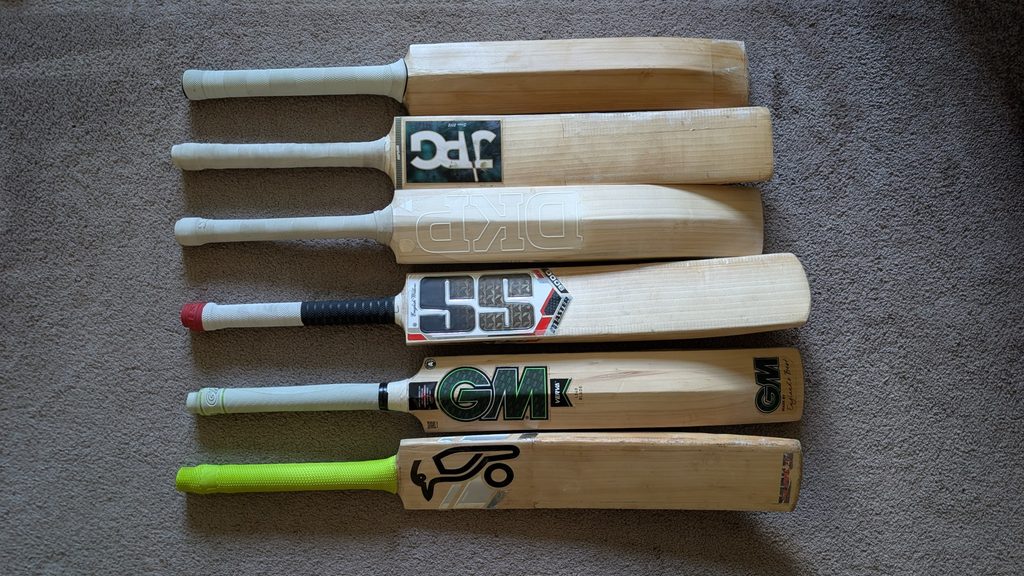
That being said, I recommend English willow bats over Kashmir willow bats. While Kashmir willow bats are cheap, they underperform and you will get much better value and enjoyment from a bottom-grade English willow bat. Look for Grade 3, 4, or 5 English willow bats to start.
Cricket bat size and weight.
Adult beginners should start with a lighter cricket bat. Using a too-heavy bat can affect your form and lead to injuries such as tennis elbow. Length-wise, I recommend a full-sized bat. All the other nuances such as profile and handle length you can fine-tune for your second bat.
How much do cricket bats cost?
In the United States, a decent English willow cricket bat costs around $150. Cricket bats require preparation and also maintenance. For example, before using your bat for the first time, the wood has to be ready (“knocked”) or it might crack. Over time, you’ll also need to replace things like the bat toe, the grip, the face, and more.
This is why it’s best to start with a budget cricket bat, so you can learn about taking care of it as you go along. Your cricket bat will be the best part of your cricket kit. While all the other gear is protective and necessary, a cricket bat is what makes the game fun.
What’s the best cricket bat for beginners?
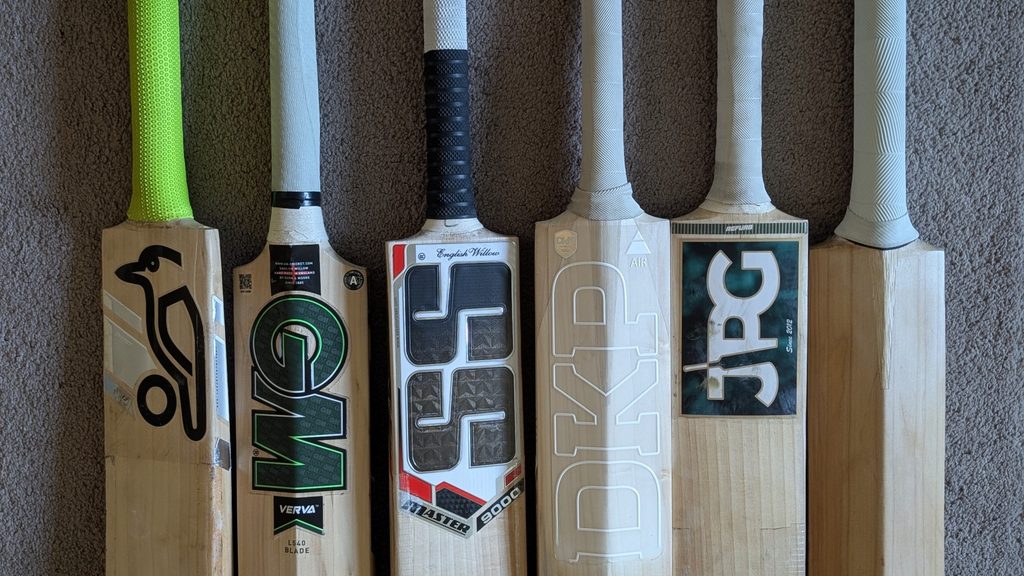
We recommend SS bats for beginners because they offer good quality and performance at affordable prices. I own an SS Master 9000 and love my bat. Based on its performance and my experience with other SS budget bats, the SS Master 1000 is a good option for about $150.
I also have a GM Verva 909 and feel that GM bats offer some of the best value in the game. All GM bats come pre-knocked and ready to play out of the box. If you find a GM bat on sale, pull the trigger and buy it.
3. Batting Pads: Crucial Leg Protection
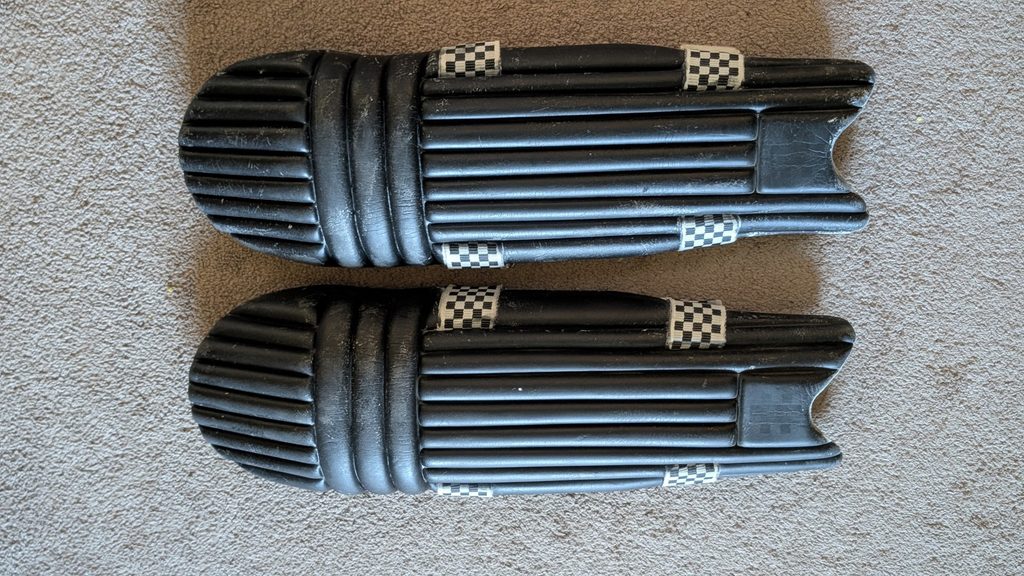
Cricket batting pads are long foam pads that cover your knees and lower legs, and protect you from the cricket ball while you’re batting. They typically have two or three Velcro straps on the back to the secure the pads onto your legs.
Do you need to wear batting pads?
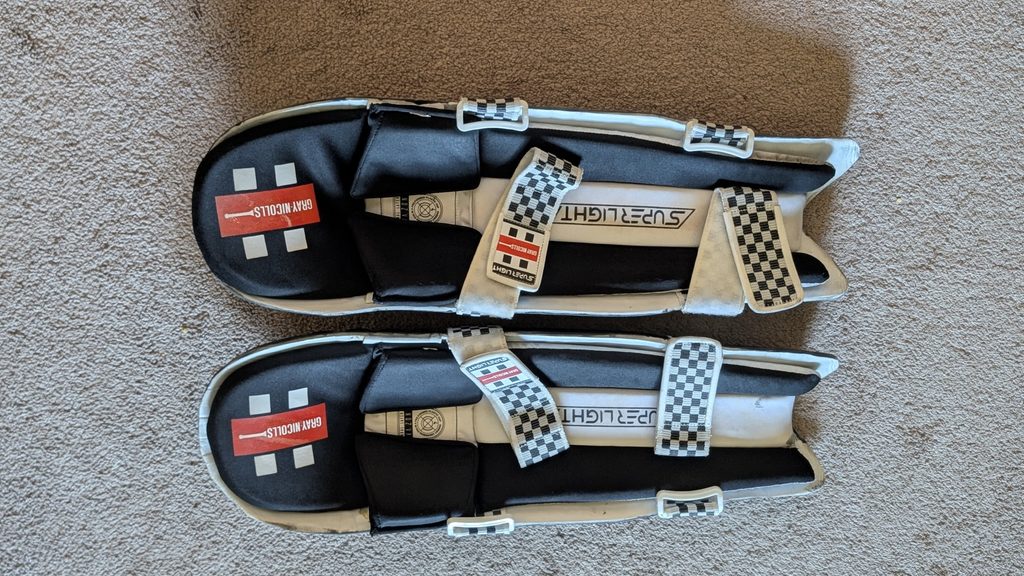
No matter what, you need batting pads in your cricket kit. They’re required in every type of hardball cricket match. Even in practice, if you get hit on the shin once with a cricket ball, even at a slow pace, you’ll never go padless again. Ask me how I know.
Cricket batting pads are cumbersome and it takes awhile to get used to running in them. No cricket players likes wearing batting pads, but everyone has to wear them.
If you play white ball cricket, you’ll have to wear color pads (so the umpire can see the ball). And if you play red ball cricket, you’ll have to wear white pads.
How much do cricket batting pads cost?
Pads range from $40 – $200. They get dirty and sweaty quickly, so there’s no point in buying at the top of the price range.
What are the best batting pads for a beginner’s cricket kit?
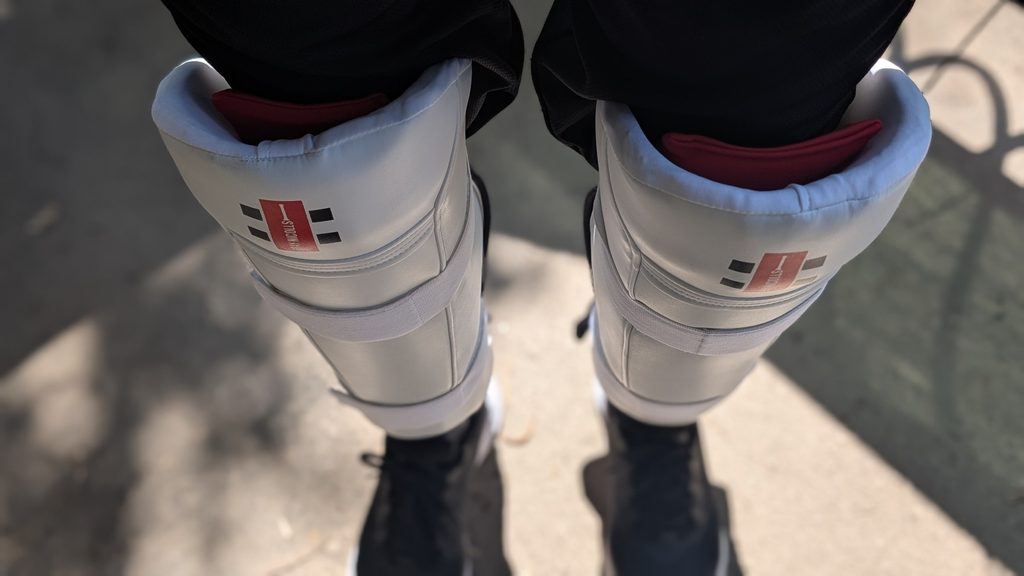
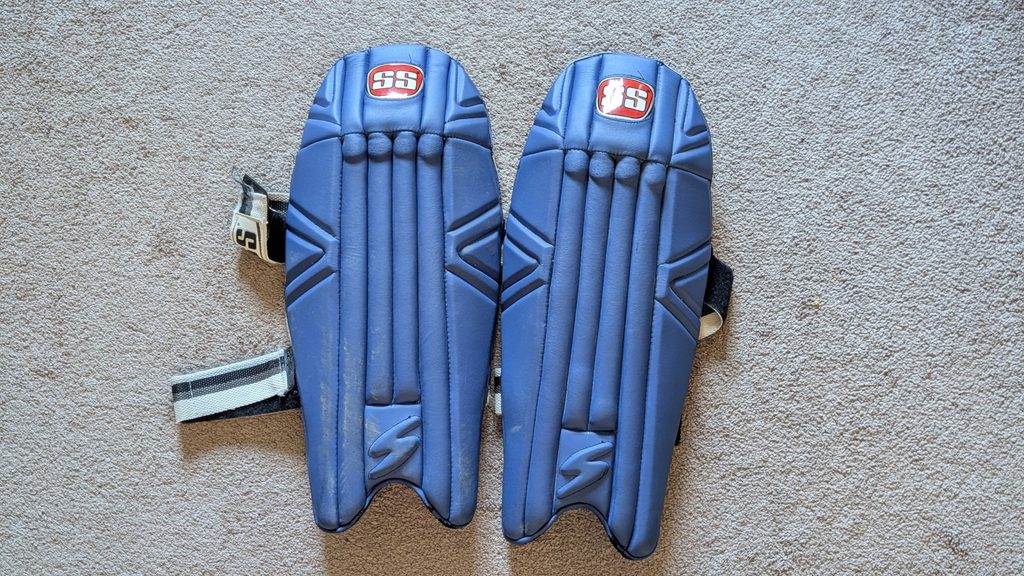
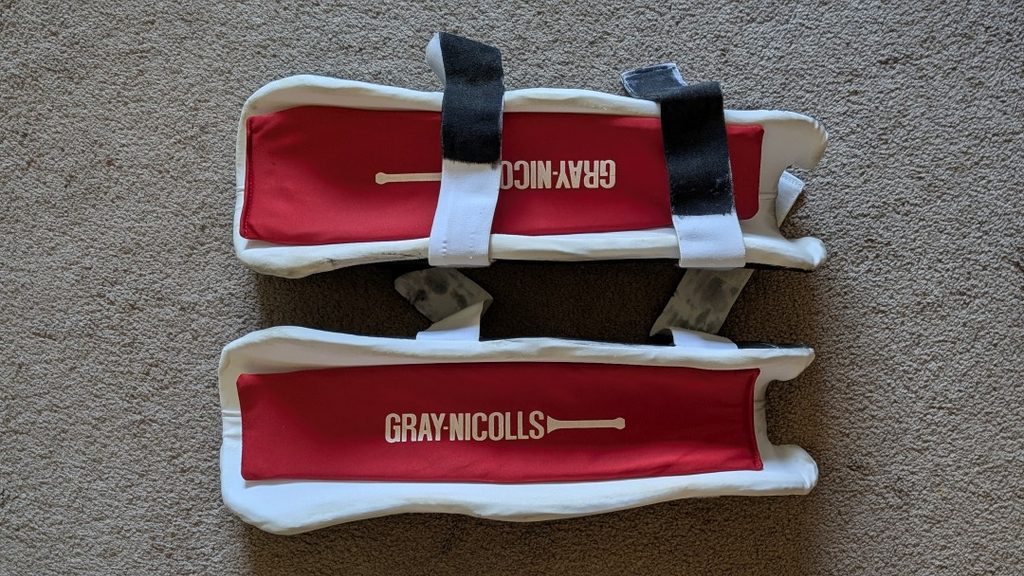
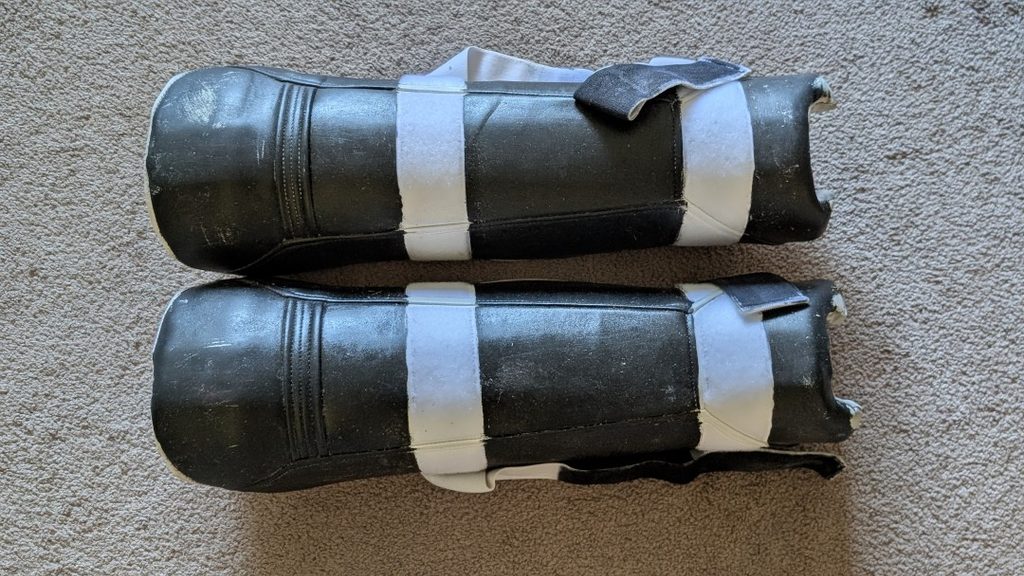
Any modern pair of foam batting pads will work for a beginner cricket player looking to build their cricket kit and learn how to play in pads. However, I’m going to go against the grain here and say that you should start with the Gray Nicolls batting/keeping/fielding pads.
They’re narrower and less cumbersome than typical cricket batting pads, while still providing full protection. Of all the batting pads I’ve borrowed and tried, these Gray Nicolls pads are the easiest to run in — and they’re under $50 on Amazon.
4. Batting Gloves: Grip and Impact Protection
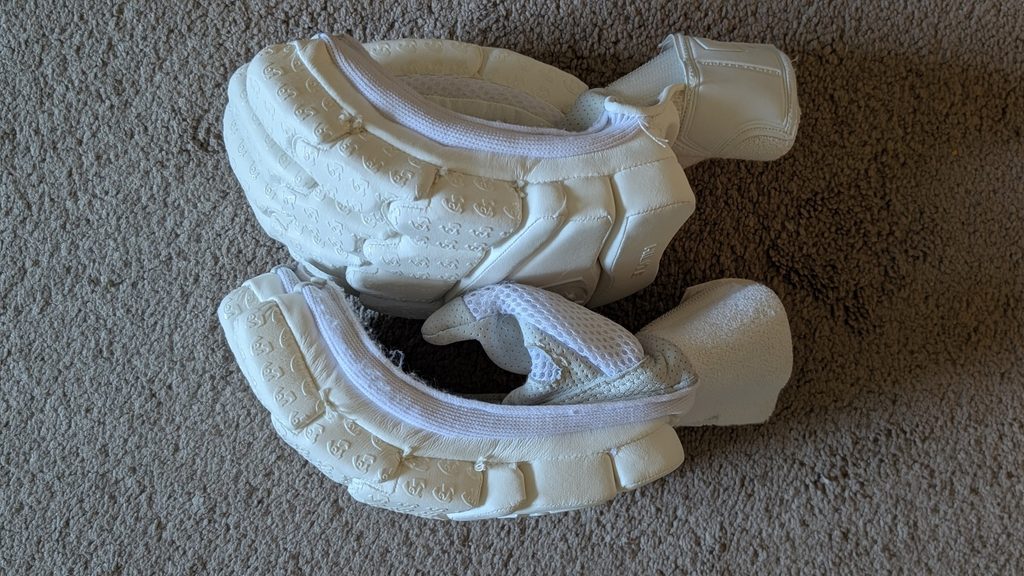
Cricket batting gloves are highly padded gloves that you wear while batting in leatherball cricket matches. They come in right-handed and left-handed versions. The thumb on your dominant hand will have more padding, since it’s exposed to the ball while gripping the cricket bat.
Cricket batting gloves are usually made out of real or synthetic leather and foam.
Are there different types of cricket batting gloves?
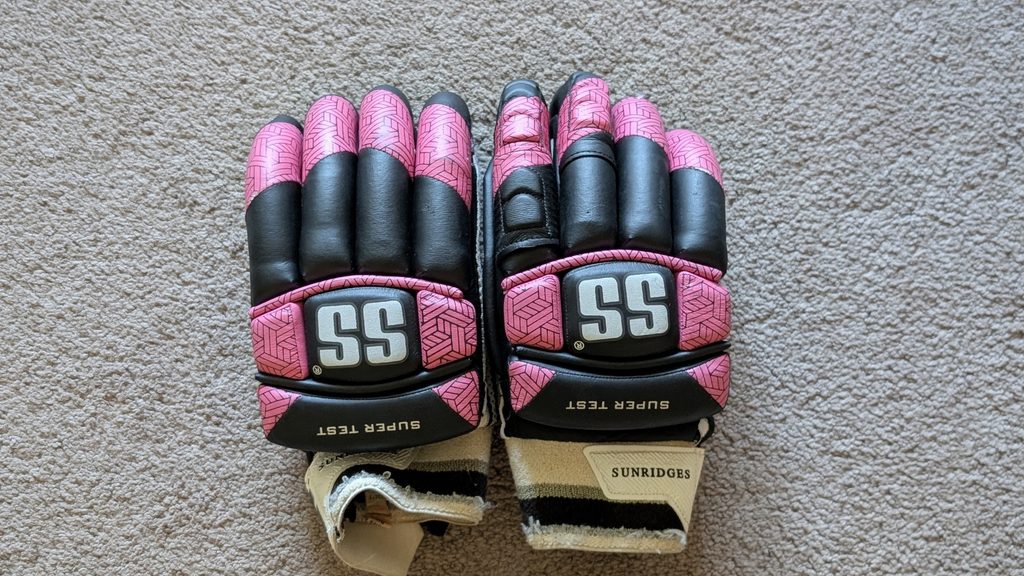
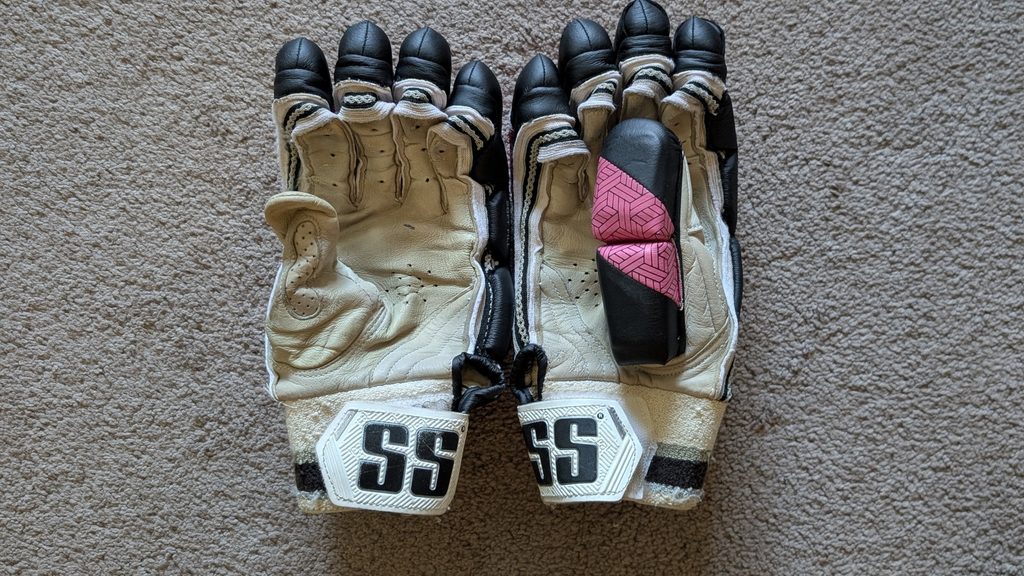
There are two types of cricket batting gloves: sausage finger and split-finger. Sausage finger gloves are more old-school and literally look like you’re wearing sausages. They offer slightly more protection than split-finger cricket gloves, but are stiffer.
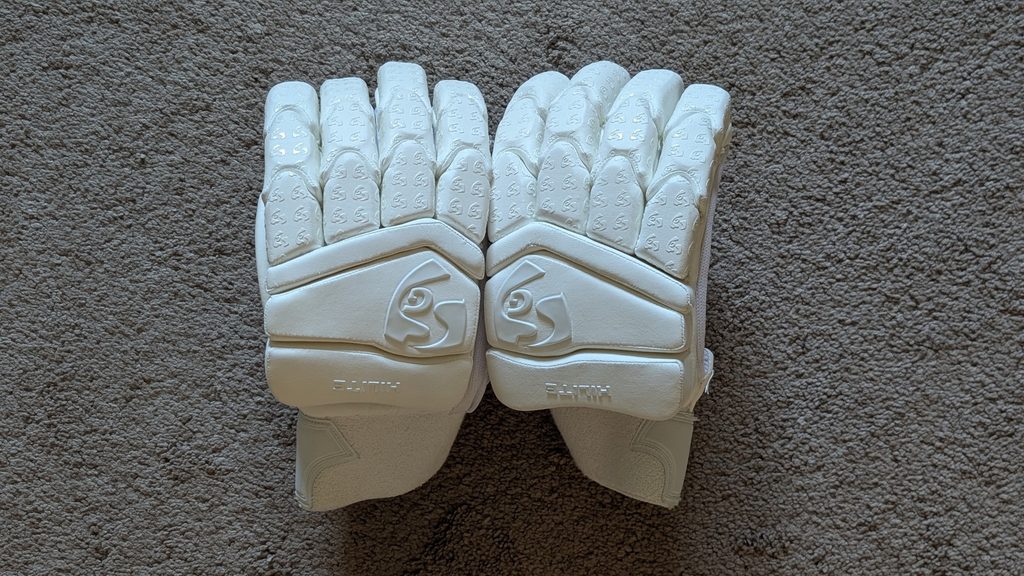
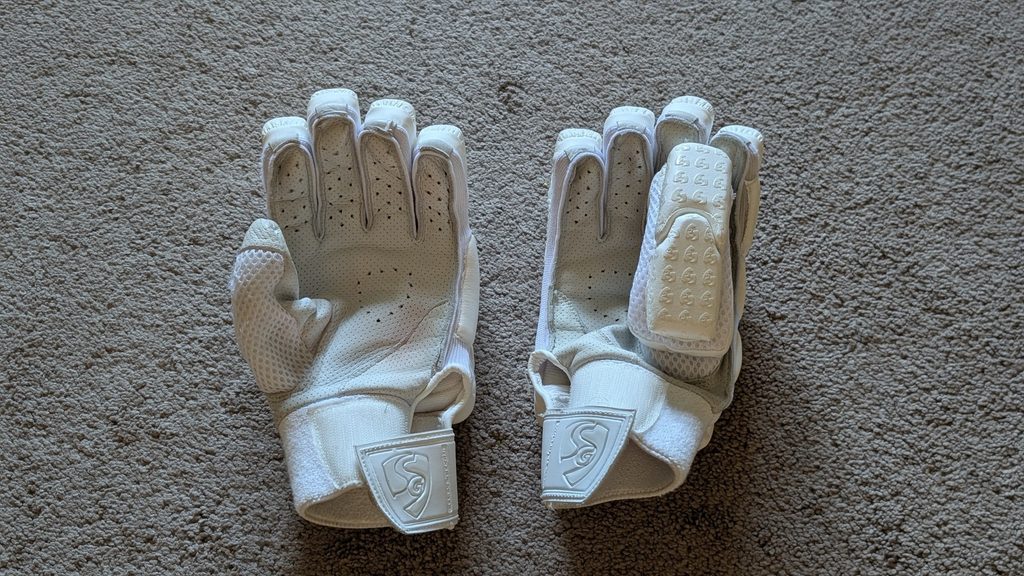
The finger foam on split-finger gloves is split into sections. It’s more flexible, but offers slightly less protection, since the ball can hit between the pieces. However, this tradeoff is absolutely worth it and most players prefer split-finger gloves.
Do I need batting gloves in my cricket kit?
Batting gloves are a necessary part of your cricket kit. Even if you don’t care about your hands getting hit at high speeds by a hard ball, you’ll quickly discover that cricket batting gloves also protect your hands and arms from bat vibrations. Ask me how I know.
How much do cricket batting gloves cost?
Batting gloves range from $20 to $150+. You absolutely don’t need to spend $150 on batting gloves. However, I recommend avoiding really cheap gloves, even for your first pair. They tend to have thick seams and poor construction, which leads to discomfort and hot spots. Mid-range gloves made out of genuine leather are miles more comfortable and last longer.
Best cricket batting gloves for beginners.
I recommend starting out with the SS Sky Hi batting gloves. They’re reasonably priced at under $50, you can get them on Amazon (and return them if you don’t like them), and they’re modern split-finger gloves made out of sheep leather.
5. Cricket Helmet: Mandatory Head Protection
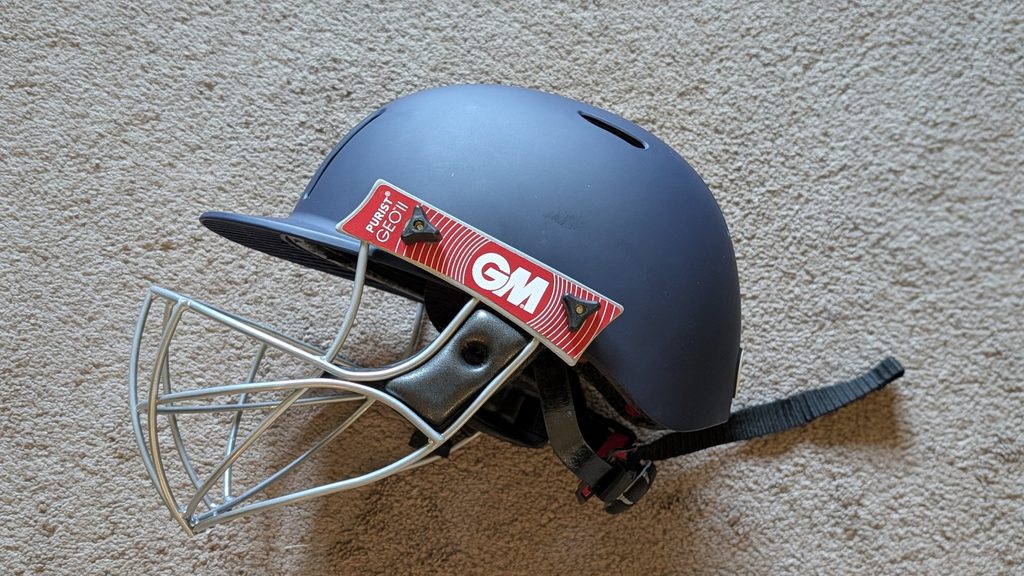
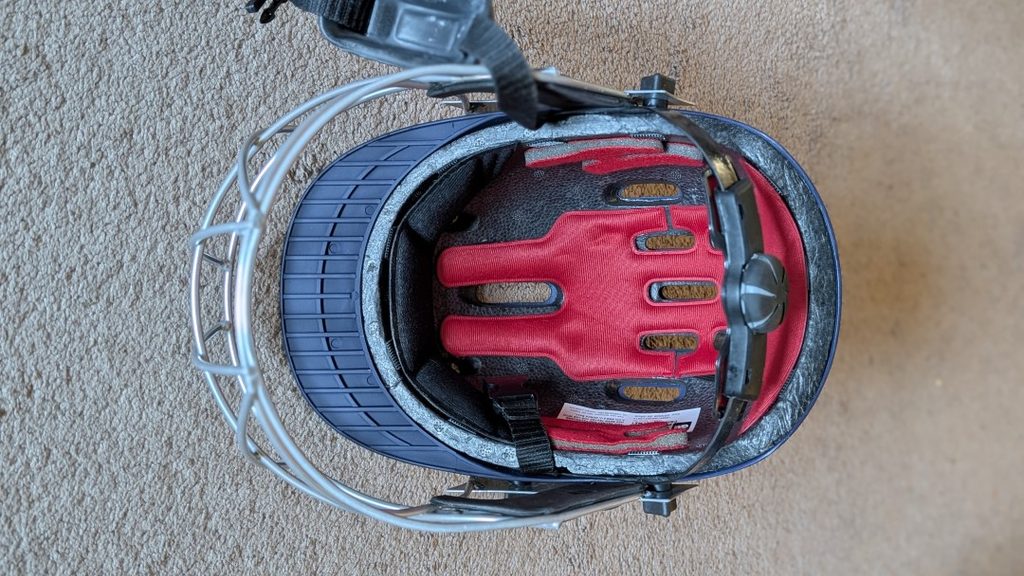
A cricket helmet protects your head while you’re batting. It consists of the actual helmet, which is usually made of molded plastic with cushions on the inside, and a metal faceguard. The faceguard covers most of your face, so that a cricket ball can’t bounce under it onto your chin or between it onto your face.
Why do I need a batting helmet in my cricket kit?
Per MCC rules, a cricket helmet is mandatory when facing fast bowlers. Players have died from getting hit in the head by a cricket ball.
In many leagues, it actually isn’t mandatory to wear a cricket helmet. Still, wear one. Always. Even with slow/spin bowling, the ball can bounce off your bat edge and do real damage to your face. Ask me how I know.
That being said, wearing a cricket helmet sucks. Even the fanciest ones feel cumbersome and decrease your visibility. Over time, you’ll get used to your batting helmet, even if you never learn to love it.
How much do batting helmets cost?
Cricket batting helmets range from $30 all the way up to $300. The $30 ones tend to be heavy, uncomfortable, and hot. I recommend spending just a bit more to get a better helmet.
What’s the best cricket helmet for beginners?
For a beginner cricket helmet, I whole-heartedly recommend the GM Purist Geo II. It’s the lightest helmet I’ve ever used, even beating out $300 helmets. It also has a size-adjustment dial, along with a price-tag under $100. This is my current helmet and my favorite helmet I’ve tested so far (read the full review here).
You can find the GM Purist Geo II on Amazon for about $90, but a lot of cricket stores in the US carry it for cheaper.
6. Cricket Shoes: The Most Personal Item in Your Kit
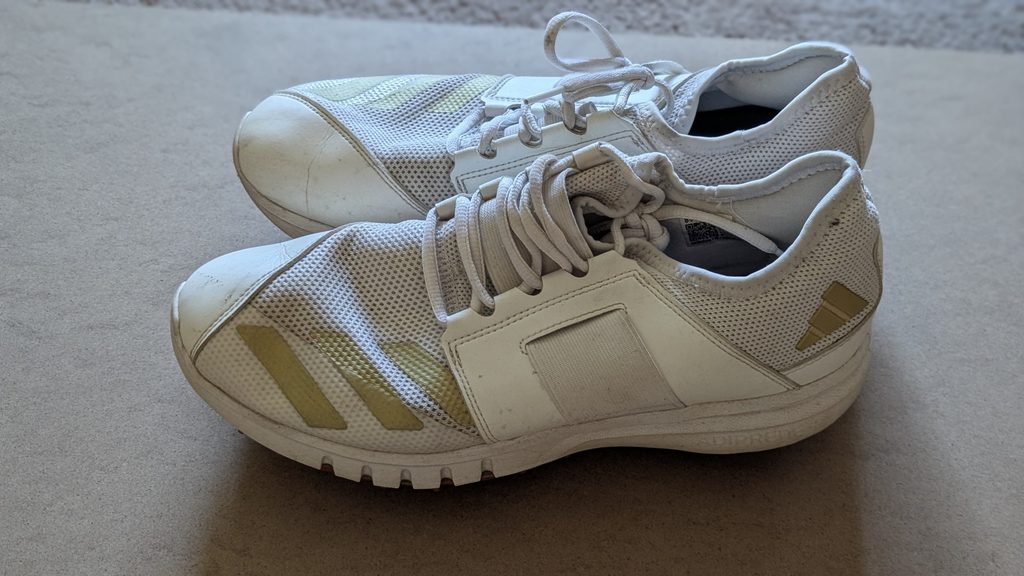
Cricket shoes are a specific type of footwear designed to grip the turf cricket field and to protect your feet from the hard ball. They’re one of the most personal items in your kit. You can borrow most of the other gear on this list, but you better have your own shoes. Ask me how I know.
That being said, you can get away without playing in a pair of proper cricket shoes. I’m nursing a running toe injury, so I’m currently playing cricket matches in Hoka gym shoes. They’re comfortable, but I’m also putting myself at risk for impact injuries and they have horrible grip.
So, for the best cricket experience and injury prevention, I recommend that beginners invest in a pair of cricket shoes.
What types of cricket shoes are there?
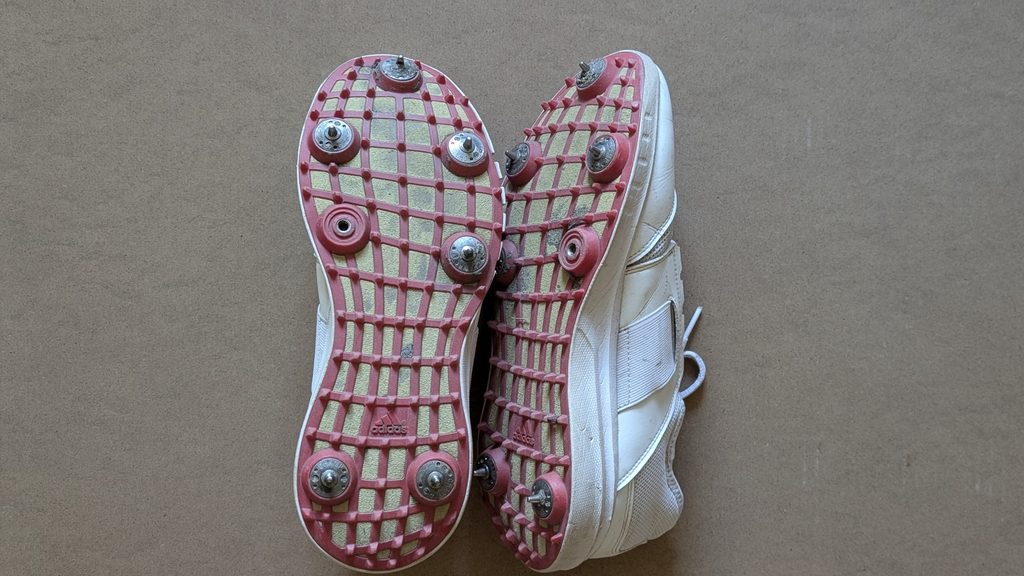
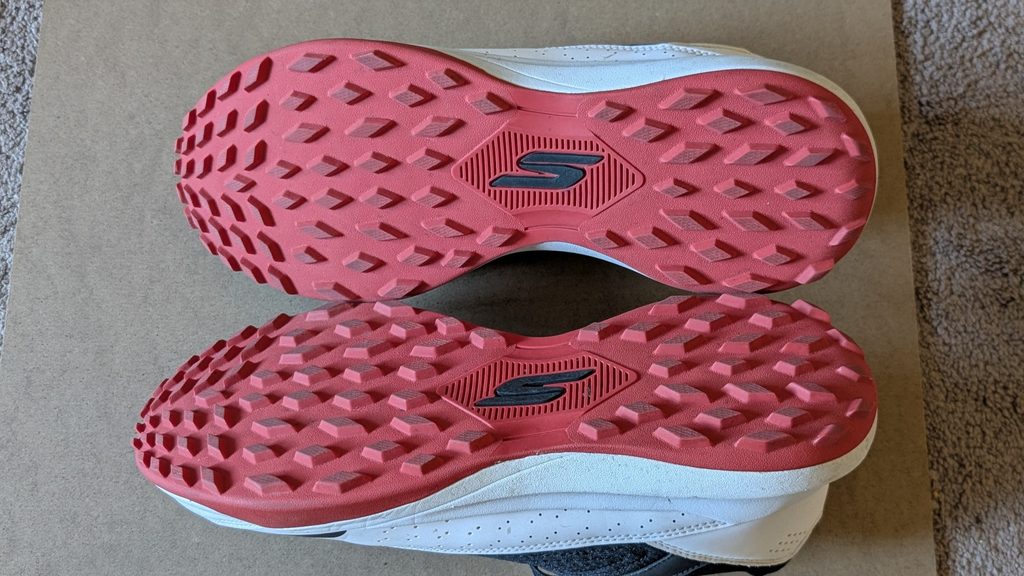
There are two main types of cricket shoes: metal spikes and rubber spikes. Both types will have a stiff real or synthetic leather upper designed to protect your toes from the ball.
Cricket spikes have big metal spikes on the bottom that provide fantastic grip on the grass when taking off during fielding, when bowling, and when batting. The spikes come in different configurations based on your specialty.
In contrast, rubber-spike cricket shoes have rubber lugs on the bottom. They’re less grippy than metal cricket spikes, but more versatile, in that you can wear them indoors to practice, on any kind of grass, and on synthetic wickets (concrete).
Can I wear other shoes during cricket matches?
Yes, you don’t have to wear cricket-specific shoes to play cricket. As I mentioned, I’m playing in gym shoes. We’ve tried or seen our teammates try: trail shoes, deck shoes, running shoes, and field hockey shoes — with varying degrees of success.
How much do cricket shoes cost?
Cricket shoes range from $25 to $180. Rubber spikes will cost less than metal spikes, which start at around $90.
I would never buy any $25 pair of running shoes and the same goes for cricket shoes. Cricket involves a ton of running, braking, and lateral movements, and a cheap pair of cricket shoes will destroy your toes, feet, and legs.
What shoes should beginners have in their cricket kit?
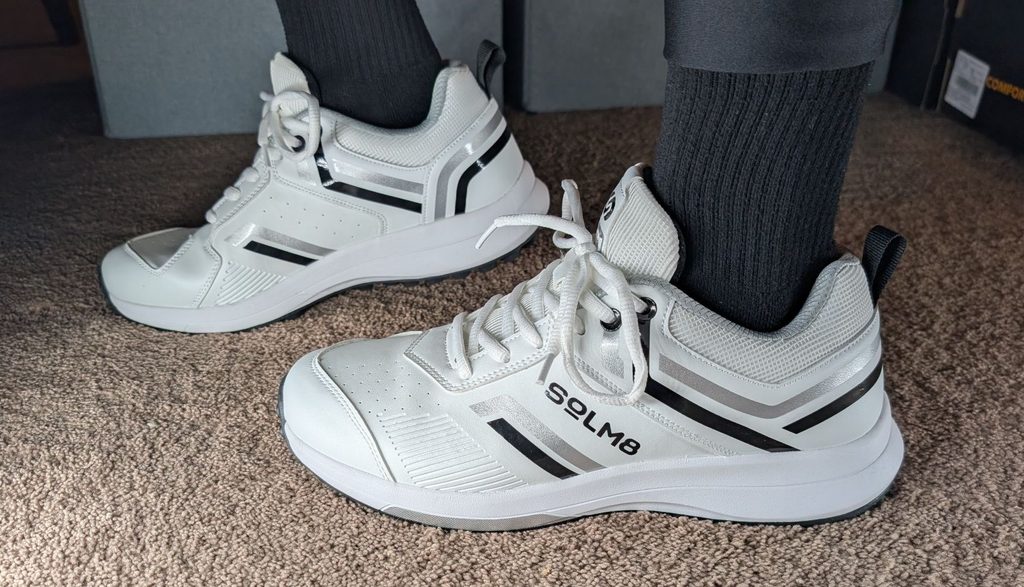
For beginner players, I absolutely recommend rubber spike cricket shoes. You can use them in any cricket scenario and they’re better for the long-term health of your foot. They typically have an EVA foam or better midsole and modern ones are almost as comfortable as running shoes.
I also recommend ordering your cricket shoes from Amazon. You’re going to find that the sizing is all off and you’re going to need to exchange them. For beginners, I recommend the SOLM8 S1 Rubber Spikes. They cost $55, they’re well-made by a good brand, they’re fairly cushioned, and they’re pretty lightweight. They’re the perfect pair of starter cricket shoes.
What’s not essential, but recommended for your cricket kit.
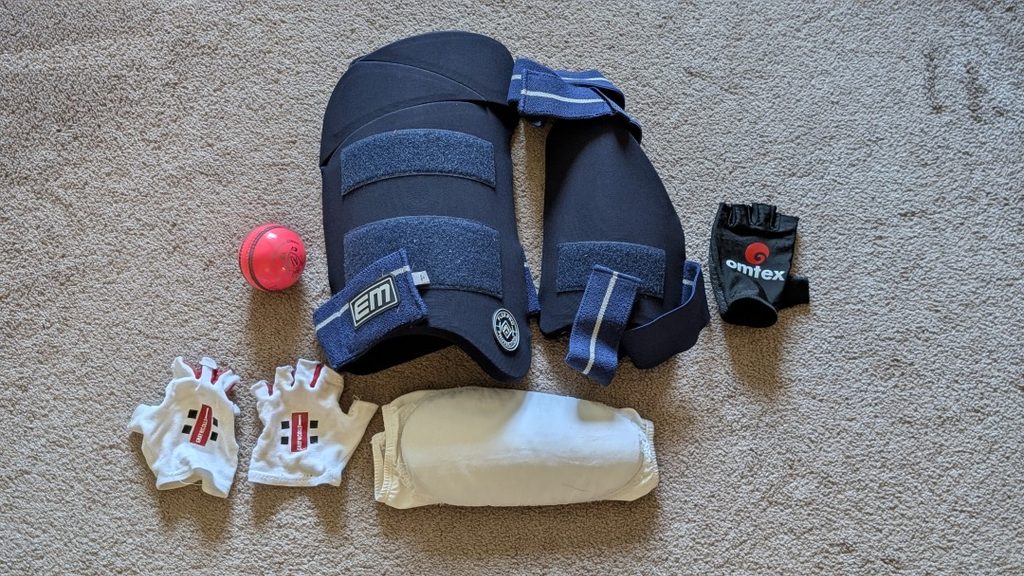
Over time, you’ll organically expand your cricket kit with other gear. There are also lots of other small items that you’re going to realize you need to comfortably play the game. For example:
- Batting inners (gloves that go inside your gloves).
- Cricket ball (to practice).
- Abdo guard (protects your privates).
- Thigh guard, chest guard, arm guard (pads to protect these areas while batting).
- Keeping gloves and inners (if you become a wicketkeeper).
And don’t forget all the cricket training essentials you’re going to need. Cricket is an expensive game, but it’s the greatest game on earth.

Hannah H.
-
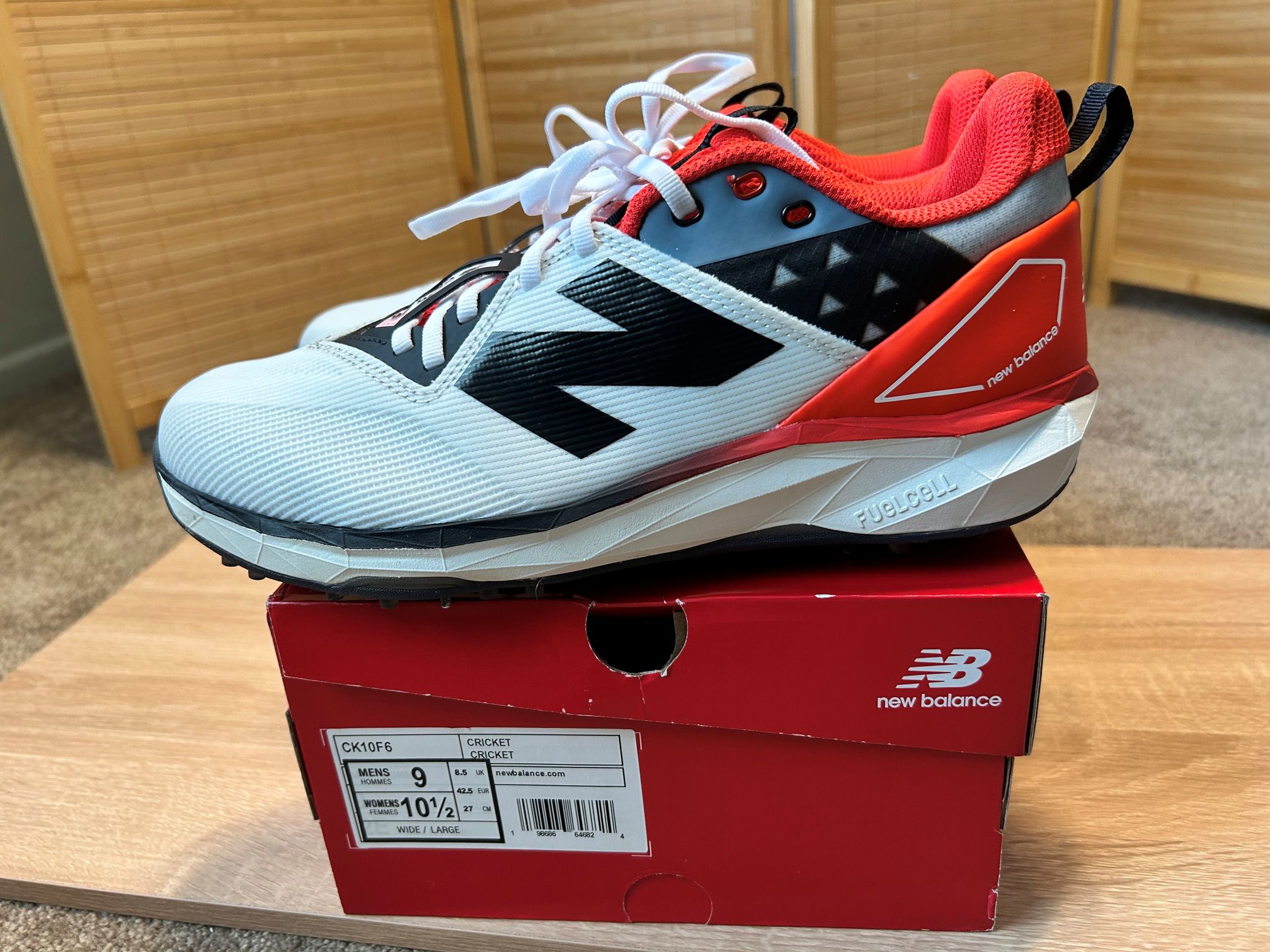
New Balance Cricket Shoes Review: The CK10 Spikes Overdo It
The 2026 New Balance CK10 F6 has quality parts, but as a whole, the package isn’t working.
-

GM Purist GEO II Helmet Review: It’s Surprisingly Lightweight
This budget GM cricket batting helmet is better than its price suggests.
-

Shrey Koroyd Helmet Review: Top-Tier Cricket Headgear Worth the Price
This top-of-the-line Shrey cricket helmet does everything it’s supposed to — and more.
-
The Str8Bat and ProVelocity Cricket Batting Tools Were More Hype Than Help
Before you buy these newfangled cricket batting tools, find out if they’re actually worth it.
Leave a Reply